TinubuPardonList: Peter Ameh calls on Nigerians to engage in governance, stressing that accountability and transparency depend on citizen participation.
TinubuPardonList continues to dominate national debate following the release of 175 names granted presidential pardon and clemency by President Bola Tinubu. While the exercise falls under the President’s constitutional powers, the inclusion of high-profile convicts and individuals found guilty of serious crimes has sparked outrage and raised questions about justice, morality, and political influence.
The list featured a mix of prominent figures, illegal miners, white-collar offenders, and individuals convicted of capital crimes. Among the most notable were Major General Mamman Jiya Vatsa, posthumously pardoned for his alleged role in the 1986 coup plot, and environmental activist Ken Saro-Wiwa, alongside the Ogoni Eight, convicted in a controversial 1995 murder case.
Maryam Sanda, sentenced to death in 2020 for culpable homicide, also received clemency after demonstrating remorse and good conduct during her six years at the Suleja Medium Security Custodial Centre. Former lawmaker Farouk Lawan and Nwogu Peters, both convicted of corruption and fraud respectively, were also among those pardoned after serving part of their sentences and showing signs of reform.
Seven inmates on death row, including Emmanuel Baba and Moses Ayodele Olurunfemi, had their sentences commuted to life imprisonment due to their remorse and positive behaviour. Others, such as Professor Magaji Garba and Major S.A. Akubo, benefited from sentence reductions based on advanced age, ill health, or educational achievements while incarcerated.
Nigerians React: Selective Mercy or Justice?
What should have been a moment of compassion quickly turned controversial. Many Nigerians questioned whether the presidential pardon was being applied fairly or selectively. Critics argued that the inclusion of individuals convicted of serious crimes undermines the justice system and sends the wrong message about accountability.
Nollywood actress Kemi Afolabi, reacting to the clemency granted to Maryam Sanda, urged Nigerians to value their lives and avoid toxic relationships. “Do not allow anyone to take your life; guard it with all your being. Be it in marriage, friendship, courtship, or any kind of relationship,” she said.
Former Vice President Atiku Abubakar accused President Tinubu of abusing the Prerogative of Mercy, claiming it “undermines the sanctity of justice” and could encourage lawlessness. Similarly, former Lagos governorship candidate Gbadebo Rhodes-Vivour described the decision as a “priority mismatch,” arguing that clemency should focus on minor, first-time offenders rather than those convicted of grave crimes.
The Legal and Moral Debate
The Prerogative of Mercy, enshrined in Section 175 of the 1999 Constitution, empowers the President to grant pardons, commute sentences, or remit penalties. The intent behind this power is to correct miscarriages of justice, show compassion, and promote national reconciliation.
However, many legal practitioners now argue that this power is being politicised and abused. Human rights lawyer Inibehe Effiong described the move as “an abuse of constitutional privilege that emboldens criminality,” questioning why individuals convicted of violent crimes and corruption should benefit from presidential mercy.
Senior Advocate of Nigeria, Femi Falana, also urged the government to withdraw and re-examine the list of pardonees. While acknowledging that the President holds the constitutional right to grant pardons, Falana argued that the inclusion of politically exposed persons, drug barons, armed robbers, and those convicted of culpable homicide makes the list appear “less about mercy and more about impunity.”
History of Presidential Pardons in Nigeria
Over the decades, Nigerian presidents have exercised the power of pardon — sometimes to promote reconciliation, other times to protect political allies.
- 1975: General Yakubu Gowon pardoned Obafemi Awolowo and other opposition figures convicted of treasonable felony.
- 1986–1990: General Ibrahim Babangida pardoned Anthony Enahoro, several civil-war-era secessionists, and coup suspects.
- 2013: President Goodluck Jonathan pardoned former Bayelsa State governor Diepreye Alamieyeseigha, his political mentor.
- 2022: President Muhammadu Buhari granted pardon to former governors Joshua Dariye (Plateau State) and Jolly Nyame (Taraba State), both convicted of multi-billion-naira fraud.
Buhari’s pardon also extended to junior officers jailed for the failed Gideon Orkar coup of 1990.
This historical pattern shows a steady drift from national reconciliation to political rehabilitation. What was once a tool to correct judicial wrongs now appears to have become a shield for political convenience and power play.
Peter Ameh Questions the Morality Behind the Presidential Pardon List
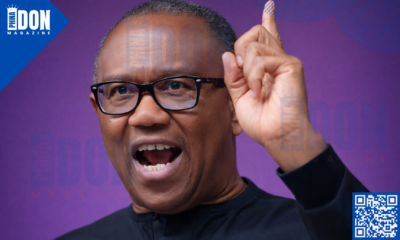
As the controversy deepens, Obidient Coordinator North Central and former National Chairman of the Inter-Party Advisory Council (IPAC), Peter Ameh, has voiced strong criticism of the presidential pardon.
In an exclusive interview with Naija News, Ameh described the move as a “total disregard for Nigeria’s constitutional democracy.” He said, “It is not just about this time. The prerogative of mercy that was granted to the presidency was to be able to use it to correct judicial miscarriage of justice. But to carry out such pardon in a way that brazenly desecrates the constitution and our judicial system… it costs a lot of money to go through these trials to get hardened criminals convicted.”
He added, “So, it is a total sense of disregard and disrespect to the entire gamut of our constitutional democracy.”










 Entertainment3 days ago
 Entertainment3 days ago
 Entertainment3 days ago
 Entertainment3 days ago