Connect with us

News

Nigeria Needs Stronger Infrastructure to Maximise Technology in Tackling Insecurity — Irabor.

Ikechukwu Emmanuel

Published

on

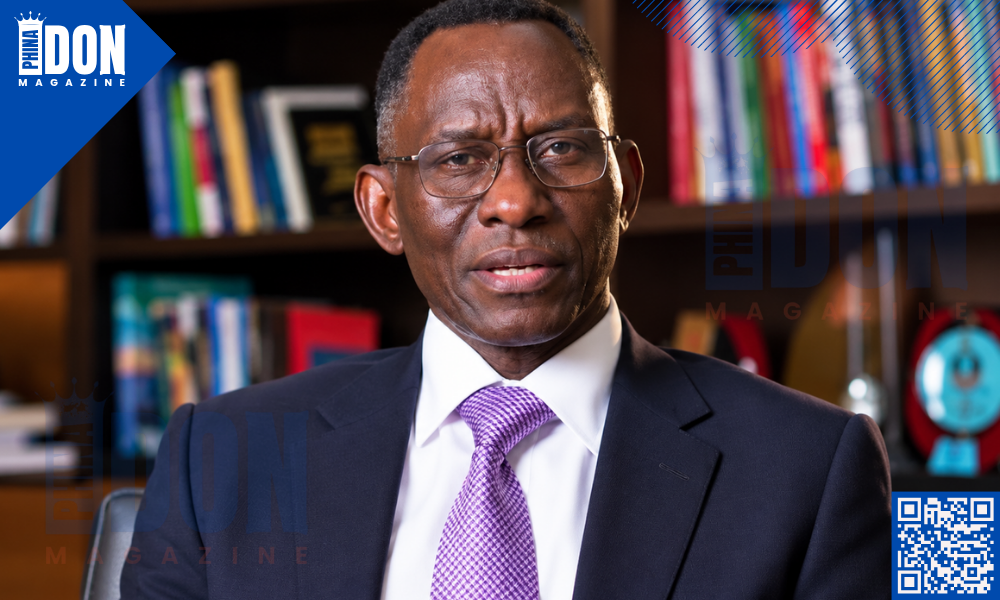
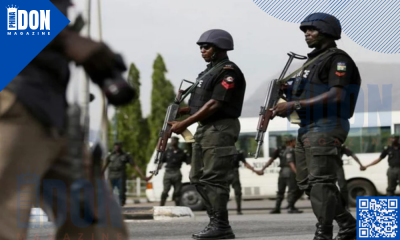
Former Chief of Defence Staff, General Lucky Irabor (Rtd), has stressed that Nigeria must develop adequate infrastructure if it is to fully harness technology in the fight against insecurity.

Irabor made the remarks during a Channels Television live programme, Generation Next: Youth, Power & The Future We Must Build, organised as part of activities marking Nigeria’s 66th Independence Day anniversary.

According to the retired general, Nigeria’s security challenges do not stem primarily from a lack of technological solutions. Rather, the central problem lies in the absence of the infrastructure and coordination required to deploy those solutions effectively.

He explained that no single technology could address the complexity of the threats confronting the country. Instead, various applications must be integrated within a broader system capable of collecting, processing and interpreting information.

“It is not about the non-availability of tech solutions or the non-application of tech solutions,” Irabor said. “No matter the technology that you have, there has to be an infrastructure within which you are to apply those tech solutions.”

He added that the integration of different technologies was essential to ensuring that they produced useful and actionable results. Without such coordination, individual systems could operate in isolation and fail to support effective decision-making.

Using drones as an example, Irabor noted that their usefulness in security operations extended beyond simply flying them over areas of interest. While drones can capture valuable images and information, their effectiveness depends on the availability of systems that can receive, transmit, analyse and distribute the data they collect.

He explained that drone footage could either be downloaded and analysed after the aircraft returned to base or transmitted in real time to an operations centre. Both options, he said, required reliable communication networks, data-processing facilities and other supporting infrastructure.

“There is an infrastructure that exists to make that possible,” he stated, noting that limitations in this area remained a significant challenge for Nigeria’s security agencies.

Despite the shortcomings, the former defence chief acknowledged that efforts were underway to address the infrastructure gap. He described the process as gradual, noting that improvements in the country’s security situation were partly linked to ongoing investments and reforms.

Irabor’s comments highlight the importance of adopting a comprehensive approach to security technology. Investments in drones, surveillance systems and other advanced tools must be accompanied by reliable digital networks, trained personnel, data-management systems and effective inter-agency cooperation.

For Nigeria to make meaningful progress in tackling insecurity, technology must therefore be viewed as part of a wider security ecosystem. Strengthening the infrastructure that supports innovation will be critical to ensuring that available solutions translate into timely intelligence, coordinated operations and improved protection for citizens.

Continue Reading
Click to comment

Leave a Reply

Your email address will not be published. Required fields are marked *

News

STATE POLICE: ALL 36 STATE ASSEMBLIES APPROVE CONSTITUTIONAL AMENDMENT, BILL HEADS TO TINUBU.

Ikechukwu Emmanuel

Published

on

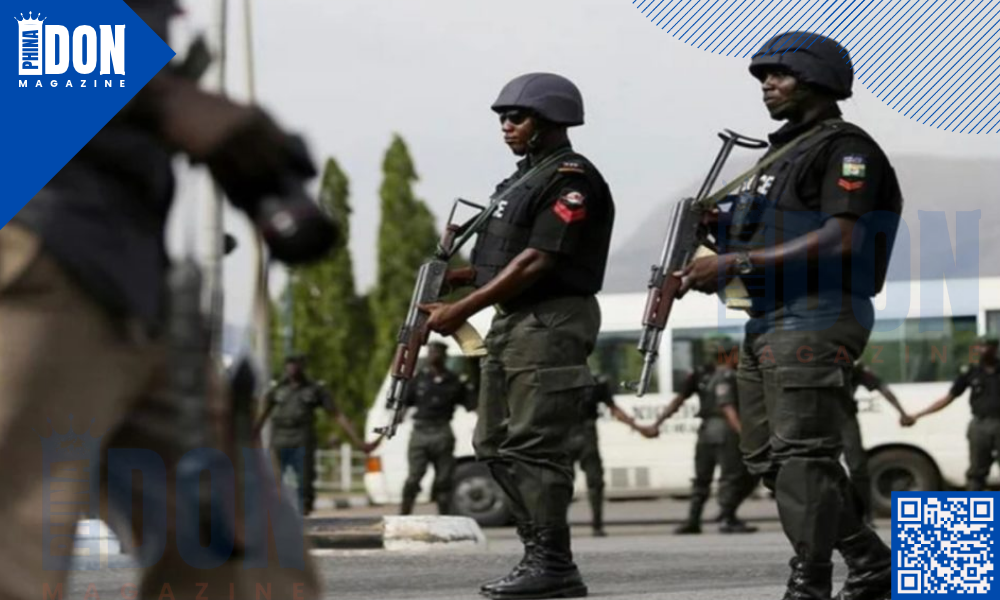
Nigeria may be moving closer to establishing state police as all 36 State Houses of Assembly have approved a proposed constitutional amendment seeking to empower state governments to establish and control their own police forces.

The unanimous endorsement marks a significant step in the legislative process, clearing the way for the National Assembly to formally transmit the proposed amendment to President Bola Ahmed Tinubu for his assent.

The development was announced on Monday by the Clerk to the National Assembly, Kamoru Ogunlana, who described the unanimous approval as a demonstration of cooperation between federal and state lawmakers.

According to Ogunlana, the approval by all 36 state assemblies exceeds the constitutional requirement of at least 24 state assemblies under Section 9(2) of the 1999 Constitution for constitutional amendments.

He explained that the National Assembly had completed the necessary verification and administrative procedures but delayed the transmission briefly to allow broader consultations and consensus among stakeholders.

Ogunlana stated: “Following the completion of the verification process by my Office, the Bill is set for transmission to the President of the Federal Republic of Nigeria, for His Excellency’s assent.”

WHAT THE PROPOSED AMENDMENT SEEKS TO ACHIEVE

The proposed legislation, known as the Constitution (Sixth Alteration) Bill, seeks to amend the 1999 Constitution to provide a legal framework for the establishment of state-controlled police services.

If signed into law, the amendment would provide the constitutional foundation for individual states to establish their own police structures alongside the existing federal policing system.

The proposal has been a subject of national debate, particularly regarding security administration, policing responsibilities, funding, accountability and the relationship between state police commands and the federal government.

Ogunlana commended the 36 state governors, speakers of state assemblies, lawmakers and other stakeholders for their contributions towards securing the unanimous endorsement.

FROM 32 STATES TO ALL 36

The latest development followed an earlier announcement by Senate Leader Opeyemi Bamidele, who disclosed that 32 state assemblies had endorsed the proposal, with reports from four outstanding states still being awaited.

Bamidele had indicated that the remaining assemblies were expected to submit their reports by Tuesday, ahead of the National Assembly’s resumption.

With all 36 state assemblies now having approved the proposal, attention shifts to the National Assembly’s formal transmission of the bill to President Tinubu.

WHAT HAPPENS NEXT?

The next major step is President Tinubu’s assent to the proposed constitutional amendment. His approval would complete the constitutional amendment process and establish the legal basis for state police.

However, the establishment and operation of state police would also require appropriate implementation arrangements, including clear operational guidelines, funding structures and accountability mechanisms.

For now, the unanimous approval by all 36 state assemblies represents a major milestone in Nigeria’s ongoing constitutional reform process, bringing the long-debated proposal for state policing closer to becoming a constitutional reality.

Continue Reading

News

INEC DEBUNKS VIRAL CLAIM OF REMOTE BVAS LOGOUT, SAYS NO EXTERNAL AUTHORITY CAN CONTROL DEVICE.

Ikechukwu Emmanuel

Published

on

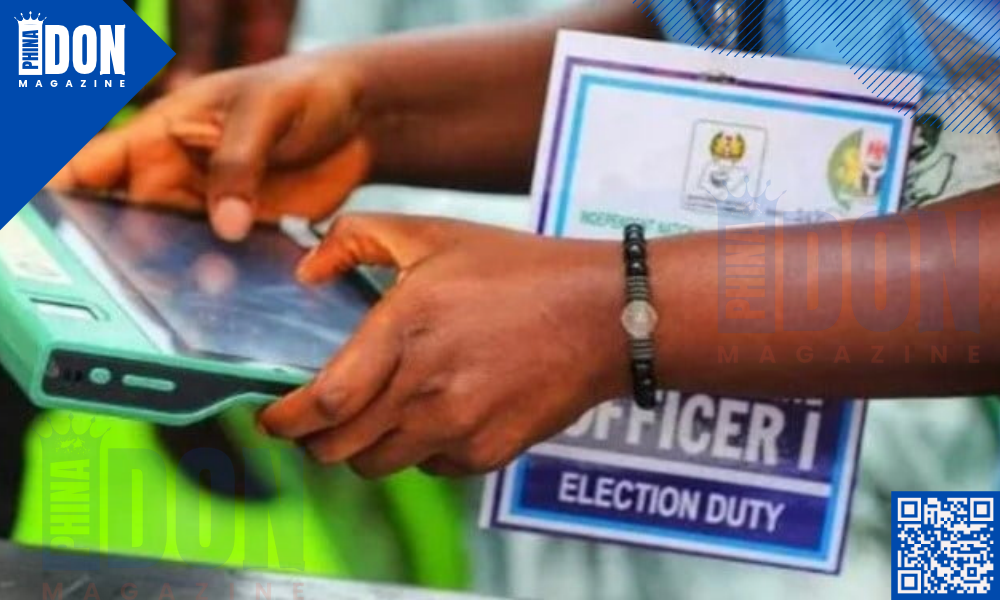
The Independent National Electoral Commission (INEC) has moved to dispel growing concerns over the credibility of its voting technology, dismissing a viral social media claim that officials can remotely log voters out of the Bimodal Voter Accreditation System (BVAS) before the official closing time for voting.

The clarification followed the circulation of a video on Instagram alleging that BVAS devices could be remotely logged out before the end of voting, potentially preventing eligible voters from completing the accreditation process.

Describing the allegation as “false, fabricated and misleading,” INEC maintained that no external individual or authority has the power to remotely log out a BVAS device.

In explaining how the system operates, the Commission stated that every polling unit is assigned unique login credentials, which are issued to the Presiding Officer responsible for operating the device during voter accreditation and the uploading of election results.

According to INEC, only the polling official operating the device can log in or log out, stressing that there is no provision for remote logout by any external authority.

INEC CLARIFIES OFFLINE RESULT UPLOADS

The electoral body also addressed questions surrounding the uploading of election results in areas experiencing poor or no internet connectivity.

It explained that following the 2023 general election, its INEC Result Viewing (IReV) application was upgraded to support offline result uploads.

Under the upgraded system, election results remain securely stored on the BVAS device and are automatically transmitted to the IReV portal once an internet connection becomes available.

The Commission said the arrangement ensures that results are not lost simply because a polling unit experiences network challenges during the electoral process.

COMMISSION URGES NIGERIANS TO VERIFY INFORMATION

INEC has urged members of the public to disregard the circulating video and avoid sharing unverified information capable of creating unnecessary fear and confusion ahead of elections.

It further advised Nigerians to rely on its official communication platforms for accurate information concerning electoral procedures, technology and updates.

Reaffirming its commitment to transparency, accountability and the conduct of free, fair and credible elections, the Commission stressed the importance of public trust in the electoral process.

The clarification comes amid continued public scrutiny of Nigeria’s election technology and the role of BVAS in strengthening voter accreditation and electoral transparency.

Continue Reading

News

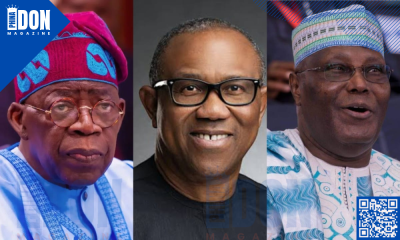
2023 ELECTION: TINUBU CROSSED 25% VOTE THRESHOLD IN 29 STATES, ATIKU IN 21, OBI IN 15.

Ikechukwu Emmanuel

Published

on

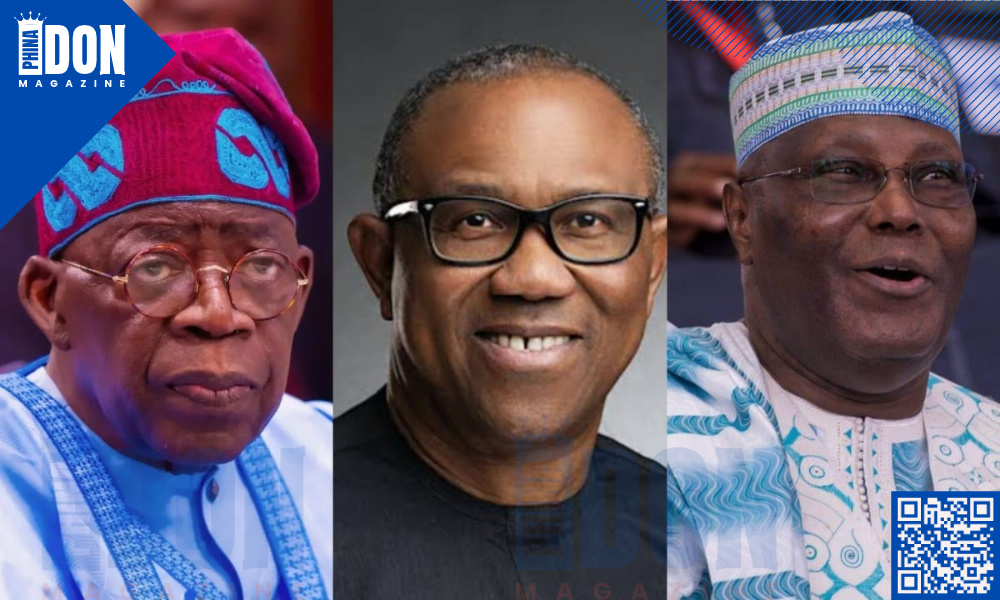
Fresh data from Nigeria’s controversial 2023 presidential election has reignited attention on the electoral performances of the major candidates, revealing how widely their support spread across the country. According to figures released by data analytics platform StatiSense, President Bola Ahmed Tinubu secured at least 25 per cent of the votes cast in 29 states, ahead of his major challengers, Atiku Abubakar and Peter Obi.

The figures, disclosed on Monday, offer another perspective on the geographical spread of votes during the election, which saw candidates of the All Progressives Congress (APC), Peoples Democratic Party (PDP) and Labour Party compete for the nation’s highest political office.

According to the breakdown, Atiku, who contested on the platform of the PDP, crossed the 25 per cent threshold in 21 states, while Peter Obi of the Labour Party achieved the same percentage in 15 states and the Federal Capital Territory (FCT). Rabiu Kwankwaso of the New Nigeria Peoples Party (NNPP), on the other hand, crossed the threshold in only Kano State.

HOW THE MAJOR CANDIDATES PERFORMED

Atiku recorded his strongest performance in Gombe State, where he secured 62.17 per cent of the votes, followed by Adamawa with 57.12 per cent and Yobe with 52.47 per cent. He also performed strongly in Kebbi, Bauchi, Sokoto, Osun and Katsina, among other states.

For Peter Obi, his strongest showing came from the South-East, particularly Anambra, where he polled an impressive 95.24 per cent, followed by Enugu with 93.91 per cent and Abia with 88.40 per cent. He also recorded significant percentages in Ebonyi, Imo, Edo, Lagos, Cross River and Plateau.

In the FCT, Obi secured 61.23 per cent of the votes, further adding to his geographical spread.

Meanwhile, Kwankwaso’s strongest and only qualifying performance was in Kano State, where he secured 58.59 per cent.

WHAT DOES THE 25 PER CENT REQUIREMENT MEAN?

Under Section 134(2)(b) of the Nigerian Constitution, a presidential candidate must secure at least one-quarter of the votes cast in each of at least two-thirds of all the states in the federation and the FCT, alongside obtaining the highest number of votes cast.

With Nigeria having 36 states, the constitutional requirement translates to at least 25 per cent of the votes in 24 states and the FCT.

Based on the StatiSense figures, Tinubu crossed the 25 per cent threshold in 29 states, five above the 24-state requirement. Atiku achieved the mark in 21 states, while Obi secured it in 15 states and the FCT. Kwankwaso met the threshold in Kano alone.

The FCT is counted separately because it is not constitutionally classified as a state.

A FRESH LOOK AT THE 2023 ELECTORAL MAP

The resurfaced figures provide an interesting picture of how votes were distributed across Nigeria during the 2023 presidential election. While Tinubu recorded the widest spread among the candidates in terms of states where he crossed the 25 per cent mark, Atiku and Obi also demonstrated considerable support across different parts of the country.

Beyond the numbers, the breakdown offers another opportunity to examine the geographical dynamics of the election and the voting patterns that shaped one of Nigeria’s most closely watched presidential contests.

Continue Reading

Trending

∧