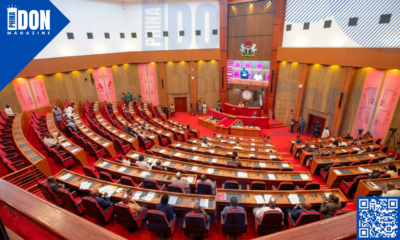
Nigeria’s House of Representatives advances a bill to grant EFCC institutional independence, limit presidential powers, and modernize anti-corruption laws.
EFCCIndependenceBill has gained momentum as the House of Representatives advanced a bill seeking to amend the Economic and Financial Crimes Commission (Establishment) Act, 2004, to grant the anti-corruption agency greater institutional independence.
The proposed legislation, sponsored by Yusuf Gagdi, a lawmaker from Plateau State, scaled second reading during Thursday’s plenary session presided over by Deputy Speaker Benjamin Kalu.
Strengthening EFCC’s Autonomy
The amendment bill aims to insulate the EFCC from political interference and align its operations with global anti-corruption best practices.
Leading the debate, Gagdi explained that the amendment seeks to modernize the EFCC’s legal framework to address the complex and evolving nature of financial crimes in Nigeria.
He noted that since the EFCC Act was enacted in 2004, the scope of financial crimes has expanded to include cybercrime, cryptocurrency manipulation, illicit financial flows, terrorism financing, and real estate-based money laundering.
“The EFCC operates under outdated provisions that do not adequately address these new realities,” Gagdi said. “Furthermore, the existing Act does not provide sufficient guarantees for the independence of the Commission, exposing it to external influence and political interference.”
Limiting Presidential Powers
A key highlight of the proposed amendment is the restriction of the President’s power to remove the EFCC Chairman.
Under the current Section 3(2) of the EFCC Act, 2004, the President can remove the Chairman at will, without legislative approval.
The amendment seeks to change this by requiring a two-thirds majority approval from both the Senate and the House of Representatives before such a removal can take effect.
Gagdi argued that this change would enhance transparency, strengthen institutional independence, and restore public confidence in the Commission’s operations.
A Step Toward Global Standards
“The bill presents a decisive step towards strengthening Nigeria’s anti-corruption framework,” Gagdi said. “It seeks to ensure that the EFCC operates as an independent, professional, and transparent institution that is responsive to modern financial crime realities.”
He added that the amendment would boost Nigeria’s global reputation, promote good governance, and enhance economic stability.
Lawmakers Back the Amendment
Supporting the bill, Ginger Onwusibe, Chairman of the House Committee on Financial Crimes, described the amendment as long overdue.
He emphasized that the principal Act does not adequately capture contemporary financial crimes, making reform essential to ensure the EFCC remains effective in combating corruption.