Quick Summary:
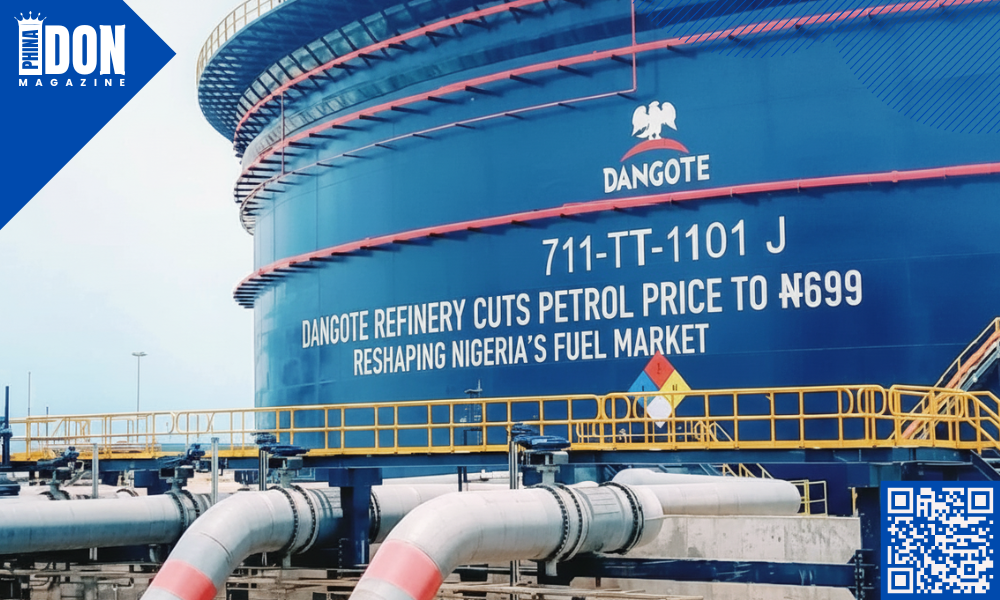
EnergyRealignment2025 as Dangote Petroleum Refinery cuts ex-depot petrol price to ₦699 per litre, reshaping Nigeria’s fuel market dynamics and influencing downstream competition.
The Nigerian energy sector is undergoing a major realignment, driven by the Dangote Petroleum Refinery’s latest pricing decision. In a bold strategic move, the refinery has announced a 16% reduction in its ex-depot petrol price, setting the new gantry rate at ₦699 per litre.
This adjustment marks a significant milestone in Nigeria’s evolving petroleum market, reflecting the refinery’s growing influence on domestic pricing and its role in stabilizing supply and cost structures within the downstream sector.
Price Adjustment in the Domestic Market
The ₦699 per litre ex-depot rate represents a notable correction in the domestic fuel pricing framework.
This move follows earlier price adjustments and is widely interpreted as part of a broader effort to promote deregulation and enhance market efficiency in the petroleum downstream sector.
As Africa’s largest refinery, Dangote’s pricing decisions carry substantial weight, shaping both market expectations and competitive responses from independent marketers and importers.
Industry analysts suggest that the refinery’s pricing model could serve as a benchmark for future domestic fuel pricing, potentially reducing reliance on imported refined products and strengthening Nigeria’s energy independence.
Potential Economic Impact
The reduction in petrol prices is expected to have far-reaching economic implications across multiple sectors.
Key Economic Effects
- Transportation Costs: Lower fuel prices could ease logistics expenses, reducing the cost of goods and services.
- Inflationary Pressure: A sustained price correction may help moderate inflation, particularly in food and transport sectors.
- Market Competition: The new price point introduces competitive pressure on other suppliers, encouraging efficiency and transparency in the supply chain.
However, analysts caution that the extent of consumer benefit will depend on distribution efficiency, marketer compliance, and government oversight to prevent artificial price distortions.
Future of Nigeria’s Energy Sector
The Dangote Refinery’s pricing initiative underscores the transformative potential of domestic refining capacity in reshaping Nigeria’s energy landscape.
As local production of refined petroleum products increases, the country stands to gain from:
- Reduced exposure to global oil price volatility.
- Improved foreign exchange stability through lower import dependence.
- Enhanced energy security and supply reliability.
The ₦699 price point is now a critical benchmark for the domestic market, and its long-term impact on affordability, supply stability, and investor confidence will be closely monitored.
Phinadon Magazine’s Observation
The Dangote Refinery’s price correction represents more than a market adjustment—it signals a strategic recalibration of Nigeria’s energy economy.
By setting a competitive domestic price, the refinery is asserting leadership in the downstream sector and paving the way for a more self-sufficient and transparent petroleum market.
As the effects ripple through the economy, Phinadon Magazine will continue to provide exclusive insights into how this development shapes Nigeria’s fiscal stability, industrial growth, and consumer welfare.