Quick Summary:
Bukola Saraki emphasizes that Nigeria’s economic reforms must prioritize citizen welfare, inclusive growth, and governance transparency to achieve lasting prosperity.
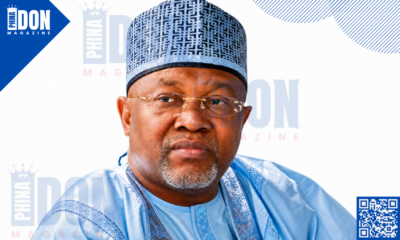
Nigeria’s ongoing economic overhaul stands at a critical juncture, with former Senate President Bukola Saraki warning that the success of current reforms depends not merely on technical policy adjustments, but on their ability to improve daily life for ordinary Nigerians.
Speaking at the launch of the “Ignite Nigeria Economic Outlook 2026 Report,” Saraki underscored that economic adjustment without public impact is inherently fragile, urging policymakers to align fiscal discipline with social inclusion.
Beyond the Metrics: A People-First Approach to Growth
Saraki argued that the true measure of economic success lies not in GDP growth or balance sheets, but in lower living costs, reliable infrastructure, and job creation.
He cautioned that growth defined solely by numbers—what he described as “arithmetic, not prosperity”—risks deepening inequality and fueling social instability.
The former Senate President called for a shift from structural reform to inclusive expansion, ensuring that economic progress is felt across all social strata.
Catalysts for Inclusive Prosperity
To achieve sustainable and inclusive prosperity, Saraki identified key sectors capable of absorbing Nigeria’s vast human capital and driving long-term growth:
- Agro-Processing & Agriculture: Harnessing Nigeria’s agricultural potential to industrialize rural economies and create mass employment.
- Light Manufacturing & Energy: Tackling infrastructure and power deficits to stimulate industrial productivity.
- Digital & Creative Economies: Leveraging the innovation and creativity of Nigeria’s youth to diversify income streams and expand global competitiveness.
Saraki emphasized that these sectors represent high-impact growth engines capable of transforming Nigeria’s economic landscape if supported by targeted investment and policy consistency.
Governance as the Ultimate Investor Incentive
Saraki highlighted that capital flows to certainty, stressing that predictable governance and transparent market operations are the strongest incentives for investment.
He urged the government to mobilize domestic assets, such as pension funds, for infrastructure development, but only within a framework that guarantees rule of law, accountability, and policy stability.
According to him, rhetoric must give way to credible governance, as investors seek environments where fairness and institutional integrity are non-negotiable.
The Path Forward
Saraki concluded that Nigeria’s economic trajectory must balance fiscal discipline with inclusive policy outcomes.
He warned that failure to connect economic theory with citizen welfare could undermine the entire reform agenda, eroding public trust and weakening the foundation for sustainable growth.
The SarakiEconomicVision2026 message is clear: economic reform must serve the people first. Only by ensuring that growth translates into prosperity can Nigeria achieve the stability and progress its citizens deserve.