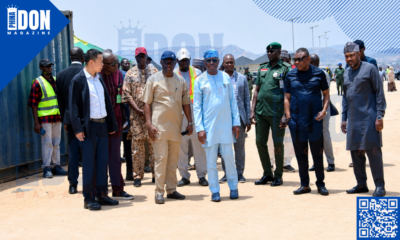
The President Tinubu Infrastructure Projects initiative has been launched to address urgent infrastructure needs in the Federal Capital Territory (FCT). President Bola Ahmed Tinubu has authorized the immediate commencement of two critical projects under emergency consideration, focusing on student housing and traffic congestion in Abuja. These directives, conveyed to FCT Minister Nyesom Wike, highlight the administration’s commitment to improving the quality of life for residents and students in the capital city.
Nigerian Law School Hostels: Tackling Student Housing Deficit
One of the most pressing aspects of the President Tinubu Infrastructure Projects is the construction of two new hostels at the Nigerian Law School, Abuja. Each hostel will accommodate 300 students, one for male students and the other for female students. This 600-capacity expansion is designed to address the persistent shortage of student housing, which has long been a challenge for law school students.
For years, students at the Nigerian Law School have struggled with inadequate accommodation, often resorting to expensive private housing options far from campus. The new hostels will not only provide affordable and secure housing but also create a more conducive learning environment. By reducing the stress of commuting and housing insecurity, the project is expected to enhance academic performance and student welfare.
Road Link to Improve Traffic Flow
Another major component of the President Tinubu Infrastructure Projects is the approval of a vital road link connecting the Body of Benchers Secretariat in Jabi District with Nile University. This road is strategically important as it will ease traffic congestion on the route leading to the Economic and Financial Crimes Commission (EFCC) headquarters.
Traffic congestion in Abuja has been a growing concern, particularly in areas with high institutional and commercial activity. The new road link will not only improve mobility for students and professionals but also enhance access to key government institutions. By reducing travel time and easing gridlock, the project will contribute to greater productivity and efficiency in the FCT.
Urgency and Execution
Mr. Lere Olayinka, Senior Special Assistant to the FCT Minister on Public Communications and Social Media, confirmed that both projects will be executed with urgency. The emergency consideration underscores the government’s recognition of the immediate impact these projects will have on residents.
The President Tinubu Infrastructure Projects are expected to be fast-tracked to ensure timely delivery. This urgency reflects the administration’s broader agenda of addressing critical infrastructure gaps across Nigeria, with Abuja serving as a model for sustainable urban development.
Broader Implications for Abuja
The launch of the President Tinubu Infrastructure Projects signals a renewed focus on sustainable development in the FCT. By prioritizing student housing and traffic management, the government is addressing two of the most pressing challenges in Abuja’s urban landscape.
For students, the new hostels represent more than just accommodation—they symbolize the government’s recognition of education as a cornerstone of national development. For commuters and professionals, the new road link promises relief from daily traffic bottlenecks, improving overall quality of life.
Commitment to Sustainable Development
These projects are part of a broader vision to transform Abuja into a city that balances growth with livability. The President Tinubu Infrastructure Projects align with the administration’s goals of fostering economic growth, enhancing education, and improving public services.
By investing in infrastructure that directly impacts students and commuters, the government is laying the foundation for long-term development. The projects also reflect a governance style that prioritizes immediate needs while planning for future sustainability.
Conclusion
The President Tinubu Infrastructure Projects in Abuja mark a significant step toward addressing critical urban challenges. With the construction of 600-capacity hostels for Nigerian Law School students and the development of a strategic road link to ease traffic congestion, the government is demonstrating its commitment to practical solutions that improve lives.
As these projects move forward, they are expected to set a precedent for future infrastructure initiatives across Nigeria, reinforcing the importance of responsive governance and sustainable development.