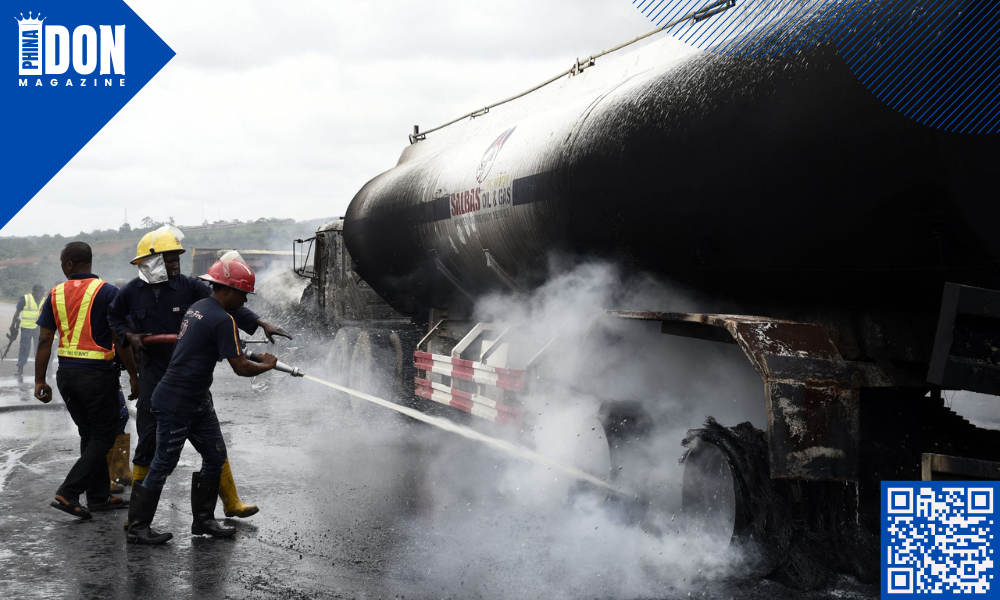
At least 29 people killed and 42 injured after a fuel tanker overturned and exploded along the Bida–Agaie route in Niger State, Nigeria.
NigerTankerExplosion has claimed at least 29 lives and left 42 others injured after a fuel tanker overturned and exploded on a motorway in Niger State, central Nigeria, on Tuesday.
According to emergency officials, the tragic incident occurred along the Bida–Agaie route, one of the state’s busiest highways.
“A lorry carrying fuel overturned and began to leak. People went to scoop up the fuel. The truck exploded and they got burnt,” said Ibrahim Hussaini, a local coordinator for the National Emergency Management Agency (NEMA). “We have 29 dead and 42 injured.”
A Recurring Tragedy
Tanker explosions are a recurring tragedy in Nigeria, often caused by poorly maintained roads, reckless driving, and fuel scooping by residents after accidents. Many of these incidents end in mass casualties as people rush to collect leaking petrol, unaware of the imminent danger.
The latest explosion adds to a growing list of similar disasters in Niger State and across the country. In January 2025, at least 98 people died after gathering to collect fuel from a crashed tanker in the same state. In March, another 10 people were killed in a pileup near Abuja after a tanker caught fire.
Economic Hardship and Desperation
Nigeria’s worsening economic conditions have been linked to the rising frequency of such incidents. Since taking office in May 2023, President Bola Tinubu has implemented sweeping economic reforms, including the removal of fuel subsidies and liberalisation of the naira.
While these policies were designed to stabilise the economy and attract investment, they have triggered a cost-of-living crisis, pushing many Nigerians into poverty and desperation. The high cost of petrol has led some citizens to take dangerous risks to obtain fuel from accident scenes.
Government Response and Public Awareness
Following previous tanker explosions, President Tinubu ordered a national awareness campaign to educate citizens about the dangers and environmental hazards of collecting fuel from fallen tankers.
Despite these efforts, enforcement and public compliance remain weak, with many communities still engaging in the risky practice due to economic hardship and lack of emergency response infrastructure.
Authorities in Niger State have launched an investigation into the latest explosion, while emergency teams continue to recover bodies and provide medical care to survivors.