
News
Lagos Protests: Erupting Over Poverty and Demolitions—A Cry for Justice


Lagos Protests highlight growing outrage over poverty and demolitions in Oworonshoki. Discover how Lagos Protests are demanding justice, housing, and an end to anti-poor policies.
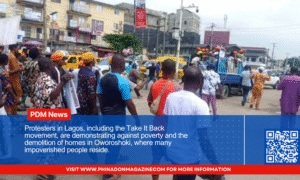
Lagos Protests have erupted as hundreds of people marched through the streets of Lagos on Friday. The demonstration marked the International Day for the Eradication of Poverty and saw protesters walk from Ikeja Bridge to the Lagos State Government Secretariat in Alausa. The event was organized by the Take It Back Movement, with support from groups like the Education Rights Campaign (ERC) and the Movement for the Transformation of Nigeria (MOTION).
The main goal of the Lagos Protests was to draw attention to the growing hunger crisis and the impact of recent demolitions in Oworonshoki, which have left thousands homeless.
Why the Lagos Protests Happened
Protesters carried placards and spoke out against what they called anti-poor policies by the Lagos State Government. They pointed to demolitions in Oworonshoki and other areas, saying families were forced out of their homes without enough notice or any alternative housing.
Juwon Sanyaolu, National Coordinator of the Take It Back Movement, said the Lagos Protests were part of a nationwide effort to fight policies that make poverty worse. He criticized both the federal and state governments for focusing on economic strategies and demolitions instead of helping citizens. Sanyaolu warned that if the government goes ahead with new tax reforms, there could be even bigger protests. He also said Lagos has the highest number of homeless people in Nigeria because the government has not provided low-cost housing since 1999.
Voices from the Lagos Protests
Hassan Soweto, Coordinator of the ERC, described the Lagos Protests as a class struggle between the rich and the poor. He said the gap between the wealthy and ordinary Nigerians is growing. Soweto accused some Lagos elites and lawmakers of benefiting from the demolitions, claiming that land taken from Oworonshoki residents is being used for luxury housing.
Community leader Towolawi Jamiu also spoke at the Lagos Protests. He accused the state government of using intimidation to take land from people who have lived in Oworonshoki for over 45 years. Jamiu said some officials have already divided the land among themselves for new luxury developments. He promised that the community would not give up their fight, no matter the threats.
A New Movement Announced
During the Lagos Protests, Promise Ngozi, Lagos Coordinator of MOTION, announced a new coalition. This group brings together over 30 million Nigerians from unions, civil society, academia, and student groups. MOTION wants to tackle the problem of widespread poverty in a country with so much wealth. Ngozi described hunger as something that affects many—mothers skipping meals, students out of school, and families living on the rubble of demolished homes. She called for everyone to join together for justice and a better future.
Government Response
Fatai Mojeed, Chief Whip of the Lagos State House of Assembly, spoke to the crowd at the Lagos Protests. He promised to take their concerns to the Speaker and to look into claims about demolition forms given out by the Oba of Oworonshoki.
Protesters said the demolitions have caused deaths and forced many to sleep on the ruins of their former homes. They demanded that the government stop further demolitions and rebuild the destroyed houses in Oworonshoki.
So far, the Lagos State Government has not officially responded to these demands.
Entertainment
Burna Boy makes history as the first male artist to reach No. 1 on Spotify’s Global Music Video Chart.





Burna Boy makes history as the first male artist to reach No. 1 on Spotify’s Global Music Video Chart.

Cardi B Addresses Maduka Okoye Speculation: “I’m Really Hip Hop’s Britney Spears”.


