Connect with us

News

Fear Without Attack: How Rumours Of School Kidnappings Sparked Panic In Minna And Beyond

Phinadon Mag

Published

on

Quick Summary:
False reports of school attacks in Minna triggered widespread fear among parents and pupils, exposing deep anxieties about insecurity and the fragile state of education safety in Nigeria.

The Day Panic Took Over Minna

“I didn’t go to school that Wednesday because I was sick, but my heart was beating fast for my mother to go and pick up my younger brother,” said Fatima Erena, a pupil, recalling the events of June 10, 2026.

Across parts of Minna, panic spread after rumours circulated that bandits had attacked schools and abducted pupils.

Although security agencies later debunked the reports, the fear they generated was real. Parents abandoned work, children cried, and teachers struggled to calm frightened pupils as rumours travelled faster than facts.

Chaos In Classrooms And Streets

The rumours spread through Bosso, Kpakungu, Sabon-Wuse, and Lambata, prompting confusion across schools.

Teachers informed pupils between 1 p.m. and 2 p.m., leading to chaos as children ran in different directions.

Teachers faced the challenge of managing fear without worsening panic.

Mrs Aina Ayodele, a teacher, said:

Outside, parents rushed toward schools. Some abandoned chores, others ran barefoot or half-dressed.

Hajiya Aisha said:

Schools Lock Down

As panic spread, schools shut their gates and restricted movement. Shuttle buses were suspended, and parents were asked to personally pick up their children.

For many pupils, the waiting was agonizing. Some cried as classmates left one after another. Others feared their parents might never arrive.

Fear That Lingered

Even after the rumours were debunked, attendance dropped sharply.

Hanan Abdullahi added:

The fear persisted, leaving emotional scars on children and parents alike.

Why Parents Believe The Worst

Many parents said the incident reinforced their decision to avoid boarding schools.

Mrs Hanatu Musa explained:

Parents blamed insecurity and past abductions for their fears, urging government to protect schools and restore confidence.

A History That Fuels Panic

The panic in Minna reflects years of trauma from school abductions across Nigeria — from Kagara and Tegina in Niger State to Afaka in Kaduna, and Zamfara, Katsina, Borno, and Kebbi.

Many families still recall ransom struggles and victims who never returned.

These memories have created a culture of react first, verify later, where rumours of attacks trigger immediate panic.

Expert Calls For Better Communication

Professor Emmanuel Musa, a criminologist, said the reaction was understandable.

He urged stronger communication between schools, education authorities, and security agencies to prevent misinformation and panic.

Psychological Toll On Children

Mrs Mercy Amina Elaigwu, a counselling psychologist, said the rumours left many pupils shaken.

Experts warn that repeated scares can cause anxiety and loss of trust in school safety.

Police And Education Ministry Reassure Parents

The Niger State Police Command dismissed the reports as false and misleading.

SP Wasiu Abiodun, the Police Public Relations Officer, said officers visited affected schools and found no evidence of attacks.

He added that the Commissioner of Police, CP Adamu Abdullah Elleman, directed officers to work closely with schools under the School Protection Initiative.

The Commissioner for Basic and Secondary Education, Dr. Hadiza Asabe Mohammed, also urged residents to disregard the rumours, assuring that schools remain safe and under constant monitoring.

A Nationwide Pattern

Similar incidents have occurred in Edo, Enugu, Lagos, Ogun, Imo, and the FCT, where false alerts and rumours have disrupted learning and triggered panic.

In Edo State, schools in Ososo and Makeke temporarily shut down over security fears.
In Enugu, police debunked viral reports of alleged attacks in Ezeagu and Igbo-Eze South.

The Hidden Cost Of Fear

Nigeria’s education system continues to suffer from insecurity and fear.

According to UNICEF, the country has 18.3 million out-of-school children, with insecurity being a major factor.

Experts warn that repeated scares — even when false — can discourage attendance and erode confidence in education.

More Than Just Rumours

For many parents, the Minna panic was not about whether the reports were true, but whether they could have been true.

Until Nigerians are fully convinced that schools are safe, fear itself may remain one of the biggest threats to education in the country.

News

An ultimatum has been issued to the EFCC, demanding the reopening of a case and prosecution of Atiku for alleged financial crimes.

Ikechukwu Emmanuel

Published

on

A recent development has brought the Economic and Financial Crimes Commission (EFCC) under the spotlight, as a former House of Representatives member, Ehiozuwa Agbonayinma, formally requested the reopening and prosecution of alleged financial crimes involving the presidential candidate of the African Democratic Congress (ADC), Atiku Abubakar.

Through his legal representative, Hannibal Uwaifo of Sagitarian Law Firm, Agbonayinma issued a 14-day ultimatum to the commission to address this request. The demand, outlined in a letter dated August 27 and received by the EFCC on September 1, is reportedly predicated on an existing EFCC investigation and a report detailing allegations against Atiku Abubakar during his tenure as Vice President of Nigeria from 1999 to 2007. This call for action underscores a continued focus on accountability and due process within the nation’s political landscape.

Continue Reading

News

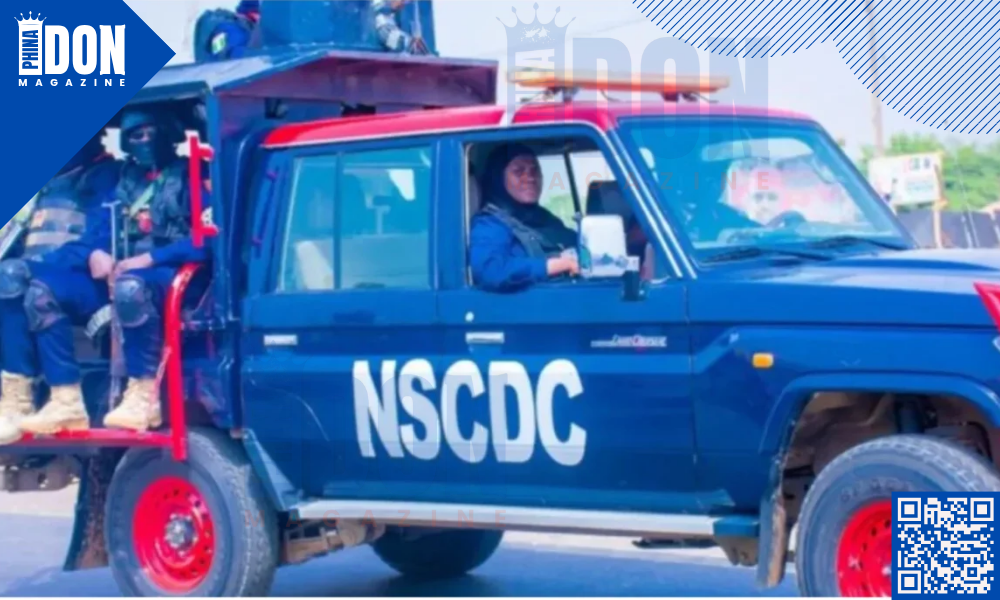
The NSCDC saved 15 children from trafficking and apprehended officers for allegedly selling service rifles.

Ikechukwu Emmanuel

Published

on

The Nigeria Security and Civil Defence Corps (NSCDC) has achieved significant breakthroughs in its fight against crime, as detailed in a recent statement by Assistant Commandant of Corps Babawale Afolabi, the NSDC National Public Relations Officer. These successes are attributed to the Commandant General’s Special Intelligence Squad and its unwavering commitment to a zero-tolerance policy on crime, corruption, and asset destruction.

In a critical operation, the NSCDC successfully rescued 15 trafficked minors. This followed an investigation into missing children in Kokona LGA, Nasarawa State, which exposed a syndicate led by Anderson Archibong. Archibong, masquerading as an NGO official under the guise of a “Back to School Project,” defrauded low-income parents by selling their children for N2,000,000 each. While 16 children were initially taken in January 2026, 15 have been recovered from various locations, including Anambra, Imo, and Enugu states. Three buyers have been apprehended, and efforts to locate the remaining child continue.

Beyond child trafficking, the NSCDC also addressed internal security breaches and illegal arms diversion. An investigation into a missing firearm at the National Headquarters led to the arrest of CAII Igah Ameh James, an officer who stole and sold an assigned AK-47 rifle. The weapon was subsequently recovered, and all involved suspects were apprehended. Similarly, an armory audit at the Adamawa State Command uncovered the sale of unserviceable G3 service rifles by former Head of Armoury, ASCI Peter Ardo, to CCA Boniface B. Lawyer, who then resold them. Both individuals are now in custody.

Furthermore, the Special Intelligence Squad dismantled an interstate telecommunications infrastructure vandalism network. Henry Dennis was arrested in Delta State with stolen telecommunications panels, leading to the exposure of a larger syndicate involving financier Yusuf Musa, who funded the theft operations and resold stolen components.

These operations underscore the NSCDC’s dedication to protecting vulnerable populations, ensuring internal security, and safeguarding critical national infrastructure. The Corps’ proactive intelligence-led approach continues to yield positive results in combating various forms of criminality across Nigeria.

Continue Reading

Entertainment

Former Big Brother Naija housemate, Kess, stated that “BBNaija makes your life harder after the show.”

Ikechukwu Emmanuel

Published

on

Life after reality television, particularly for contestants of a show as prominent as Big Brother Naija, often appears glamorous from an outsider’s perspective. However, a recent statement by former housemate Kess offers a starkly different and more challenging reality. Kess, reflecting on the post-show experiences of his peers, asserted that the popular reality series, far from simplifying life, actually makes it “far more complicated” for its participants, irrespective of whether they emerge as winners.

Kess’s remarks, shared on X, highlight a continuous battle for relevance and opportunity that extends long after the cameras stop rolling. He noted that while former housemates may receive encouraging words, this is often not accompanied by tangible support or “money” to navigate their new, complex realities.

The sheer volume of individuals who have passed through the Big Brother Naija doors further intensifies this post-show competition. With 249 housemates across 11 seasons, as Kess pointed out, the struggle for attention and career advancement becomes an increasingly crowded and demanding arena. This insightful commentary from a former participant sheds light on the often-overlooked difficulties faced by those who step out of the Big Brother house and into a world that, for them, has become undeniably harder.

Continue Reading

Trending